Our people
PRONI is part of the Northern Ireland Civil Service and operates as a division of the Department for Communities (DfC) within the Engaged Communities Group (ECG).
Keeper of the Records

As established by the Public Records Act (Northern Ireland) 1923, the role of Keeper of the Records has been held by the government minister for the Department governing PRONI.
The current Keeper of the Records is the Minister for Communities, Gordon Lyons MLA.
Deputy Keeper of the Records
The Public Records Act (Northern Ireland) 1923 also established the role of the Deputy Keeper of the Records to work alongside the Keeper. The current Deputy Keeper and Director of PRONI is David Huddleston.
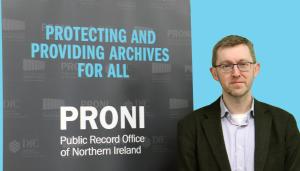
David is responsible for overseeing the work of PRONI, the public records system in Northern Ireland and discharging PRONI’s statutory duties to receive, preserve and provide access to public records. David leads a team of over 120 people, providing strategic vision for the organisation as it carries out its vital role as guardian of the records of Northern Ireland.
PRONI interim operating model
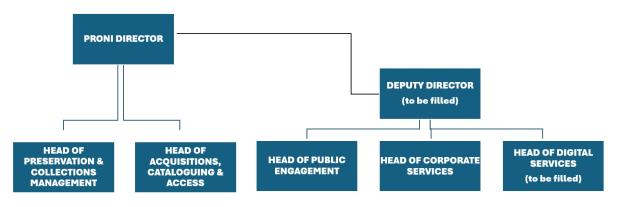
In 2022 the Department commissioned an independent strategic and organisational review of PRONI. Among other recommendations, the review recommended an optimal structure for the division. This diagram sets out the current interim operating model.
Our role
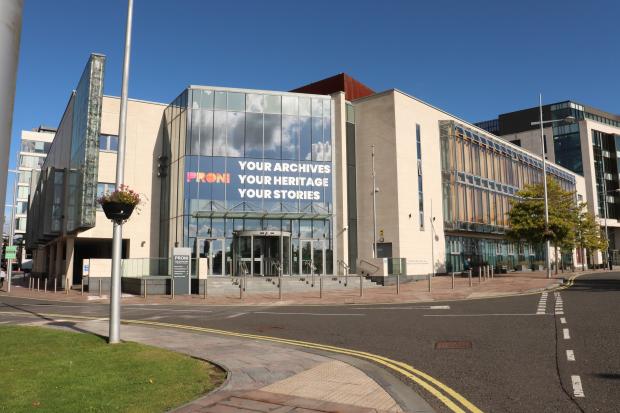
The Public Record Office of Northern Ireland (PRONI) is the national archive for Northern Ireland. Our role is to identify, preserve and enhance access to records of historical, social, and cultural significance; ensuring they are accessible for learning, research, and enjoyment of the public.
PRONI is the only archive service in Northern Ireland with Archive Service Accreditation, reflecting our commitment to excellence and guided by our vision of ‘Protecting and Providing Archives for all.’
PRONI is the official place of deposit for public records of historical significance in Northern Ireland and we work closely with Northern Ireland's public authorities to promote records management best practice. We also hold extensive collections from private sources including churches, businesses, community groups and individuals.
We offer free access to our collections, which serve as vital resources for researchers, historians, genealogists, and the general public. We also host a vibrant programme of free events and exhibitions.
Our history
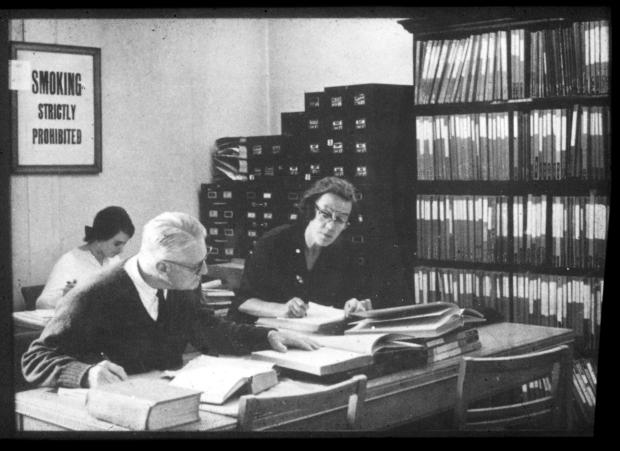
Following the partition of Ireland in the 1920s, the Government of Ireland Act 1920 set out provisions for Northern Ireland to establish a separate official archive in the province.
PRONI was born under the Public Records Act (Northern Ireland) 1923, which established us as the official archive for the reception and permanent preservation of public records in Northern Ireland. The Act also made provisions for PRONI to preserve privately deposited records and appointed the Minister of Finance as the Keeper of Records.
PRONI was officially opened to the public in March 1924 and operated on the fourth floor of a former linen warehouse in Murray Street, Belfast. We quickly outgrew our original premises and relocated to the Royal Courts of Justice on Chichester Street in 1933.
In 1972, PRONI was moved into our first purpose-built facility on Balmoral Avenue, marking a significant milestone in our growing importance as the custodians of Northern Ireland’s archival heritage.
In March 2011, PRONI was relocated to our current home in the Titanic Quarter, Belfast. This purpose-built building offers modern facilities including a spacious public search room, reading room as well as conference and exhibition spaces. Additionally, the move provided bespoke archival storage for the preservation of our collections.
PRONI was initially part of the Ministry of Finance before being transferred to Department of the Environment (DOE) in the 1980s. Following the return of Northern Ireland's devolved government in 1999, PRONI was set up under the new Department of Culture, Arts and Leisure (DCAL). Since 2016, PRONI has operated as a division of the Engaged Communities Group within the Department for Communities (DfC).