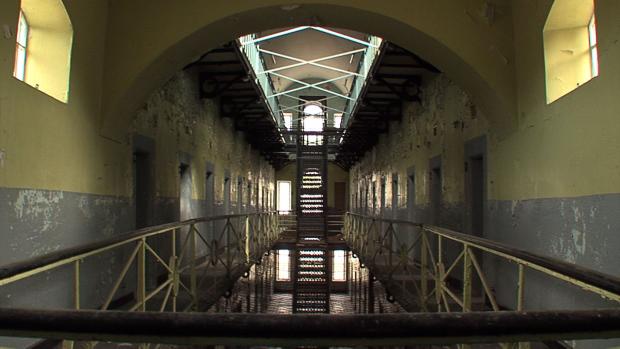
The Prisons Memory Archive (PMA) is a collection of 161 filmed oral history recordings of individuals who had a connection with Armagh Gaol and the Maze and Long Kesh Prison during the conflict in and about Northern Ireland.
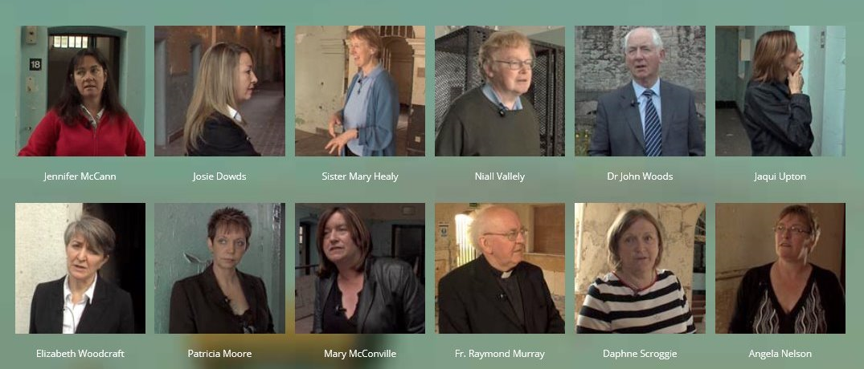
Participants
The Prisons Memory Archive (PMA) originally comprised 175 filmed walk-and-talk recordings. Most of these were filmed in Armagh Gaol in 2006 and the Maze and Long Kesh Prison in 2007. The range of participants includes prison staff, prisoners, relatives, tutors, chaplains, lawyers, doctors, probation officers and maintenance workers. Over the course of time, a number of participants withdrew from the PMA for a variety of reasons.
Ethical Framework
The PMA project, led by Professor Cahal McLaughlin, had an ethical framework based on three core principles:
Inclusivity – It was recognised that where narratives from the past are contested, it is important to consider many perspectives.
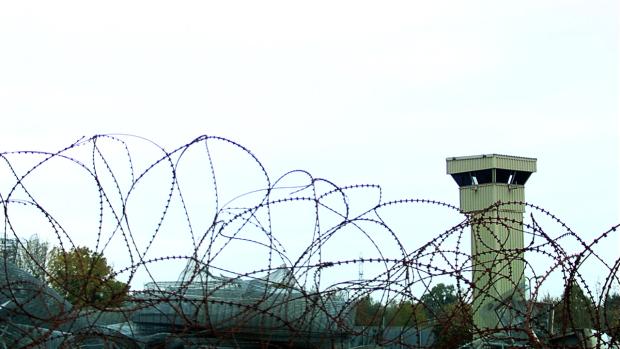
Life-storytelling – The project followed the oral-history practice of life-storytelling and aimed to have an open-ended approach to the recording process. For the majority of recordings, participants were brought back to the empty sites of the Maze and Long Kesh Prison and Armagh Gaol. A fifteen-minute briefing before the filming discussed the process and what issues they wished to cover. The sites’ architecture helped trigger the participants’ memories.
Co-ownership – In order to establish trust, the participants shared ownership of the recordings with the PMA. Participants were involved at all stages of production and proposed re-use of their recordings.
Visual Voices of the Prisons Memory Archive Project
The delivery phase of a project, 'Visual Voices of the Prisons Memory Archive: preservation, access and engagement', received funding from the National Lottery Heritage Fund (NLHF) in September 2016. The project was delivered by a partnership of Queen’s University Belfast (QUB), PRONI and the Management Group (which included representatives of PMA participants).
The main objectives of this project were to preserve the oral history recordings, to make the collection more accessible through digital innovation and to engage with communities to help people learn more about shared heritage. A small number of additional oral history recordings were also made during the project.
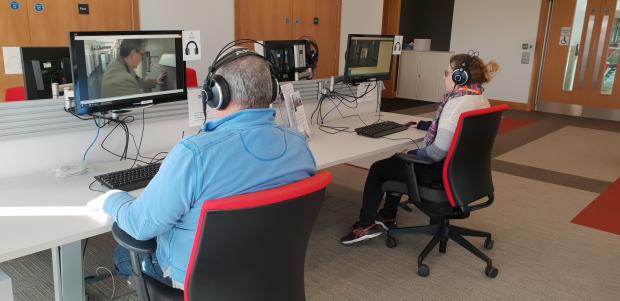
A total of 161 recordings were transferred to PRONI between 2017 and 2021. 139 of these recordings can be accessed through designated PCs in the PRONI search room.
PRONI continues to work with QUB and the Prisons Memory Advisory Board in relation to encouraging access and engagement with the collection.
How to Access the PMA
The filmed oral history recordings are catalogued under the reference number D4616/2. Each recording is accompanied by a detailed summary outlining topics covered by the participant and noting site locations that feature within the recording. These summaries can be viewed by using the 'Browse' function on the eCatalogue. The recordings themselves can be viewed through the PRONI catalogue in the Search Room. Pease note that some people may find some of the content in these recordings distressing.
The collection also comprises photographs of Armagh Gaol (D4616/3/1) and of the Maze and Long Kesh Prison (D4616/3/2). These photographs were taken by Professor Cahal McLaughlin as part of the Prisons Memory Archive in 2006 and 2007 respectively. These photographs are available to view through the onsite catalogue and eCatalogue.
Prisons Memory Archive Website
For more information, visit the Prisons Memory Archive website. On this website, you will find a number of complete oral history recordings and a range of curated extracts, as well as shorts and feature films based on the PMA. This website also includes a range of resources for teachers and students.