
Belfast Jewish Heritage and the European Holocaust Research Infrastructure UK (EHRI-UK) supported our Private Records team to make a significant collection of Holocaust-related records more accessible to the public.
From September 1938 to April 1939, the Northern Ireland Ministry of Commerce received over 500 letters from Jews, mainly living in Vienna, seeking to set up new businesses or create employment opportunities in Northern Ireland. The letters were written following Germany’s annexation of Austria in March 1938 and the persecution of Jews under the Nuremberg laws. These letters were retained within 50 files by the Ministry of Commerce.
An index lists the details of 1132 individuals most of whom are mentioned by name within these letters. Where the information is noted in the letter, the index also records personal information such as the writer’s address and date of birth and details of their profession, trade or business.
Background
Most of the letters were written in response to a short notice which appeared in Vienna’s Jewish newspaper Zionistische Rundschau on the 26 August 1938:
‘Ireland is prepared to provide immigrants from Central Europe with as much support as possible if they can establish new industries in Northern Ireland or support existing ones in practical ways and thereby contributing to a reduction in unemployment … Applications for permits to found industries must be addressed to the Northern Ireland Department of Trade and Industry, which will examine the applications carefully but at the same time sympathetically…’
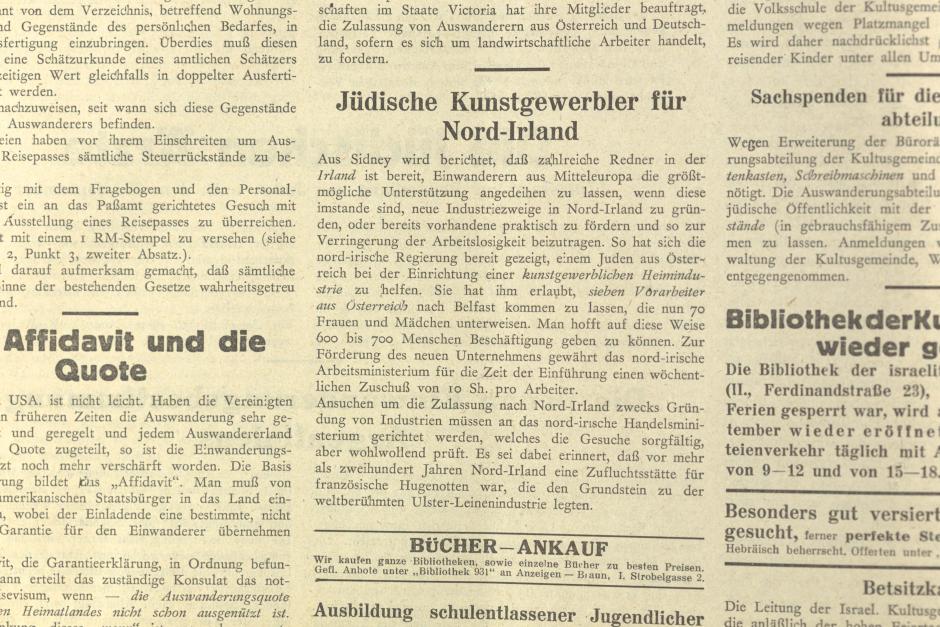
The notice referred to The New Industries (Development) Act (Northern Ireland) of 1937 (which replaced an earlier Act of 1932) empowered the Northern Ireland Ministry of Commerce to make loans and grants available to enable new manufacturing businesses to be set up or allow existing businesses to expand.
The Act was not mentioned by name within the notice nor was the fact that applicants were required to demonstrate that they had sufficient financial resources of their own and to complete a detailed application form. The government of Northern Ireland did not have the power to issue visas to refugees or any other foreigners. Immigration was controlled by the Home Office in London who did, however, seek guidance from the Northern Ireland Ministry of Home Affairs in relation to applications to enter the United Kingdom via Belfast. The constraints of the New Industries Act and the remit of the Ministry of Commerce meant that these desperate attempts to seeking refuge in Northern Ireland were unsuccessful.
The Letters
The Ministry of Commerce officials made efforts to categorise and review the letters and responded to a number of them. Some letters are inscribed with a brief note written by Ministry of Commerce officials (for example, "Regret", "No Reply" etc.) and some are accompanied by an official letter from the Ministry of Commerce.
Most of the letters were written from Vienna. There are a number of letters written from other locations. The letters from Czechoslovakia are, most likely due to the impact of the 1938 Munich Agreement ceding the Sudetenland areas of Czechoslovakia to Germany. The letters from Hungary are likely due to the substantial persecution which the Hungarian government imposed on Jews, beginning in May 1938. The letters from Britain were mainly written on behalf of another individual. The letters from Switzerland were written by individuals who were allowed to reside there on a temporary basis.
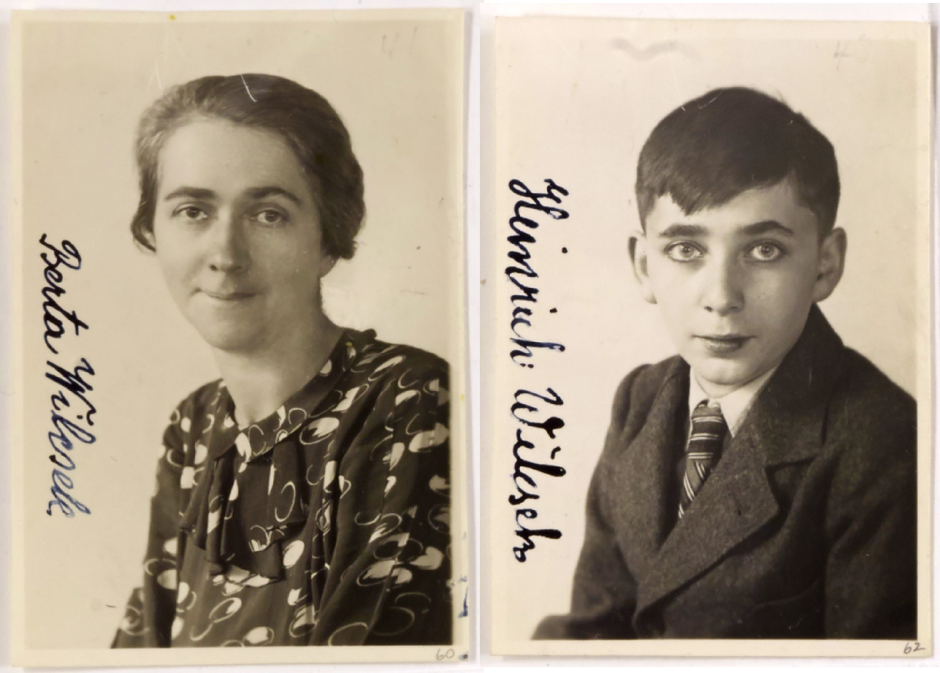
Many of the letters include personal information about the letter writers’ families or employees. Some are accompanied by photographs of the applicants or by photographs of their products or ephemera relating to their businesses.
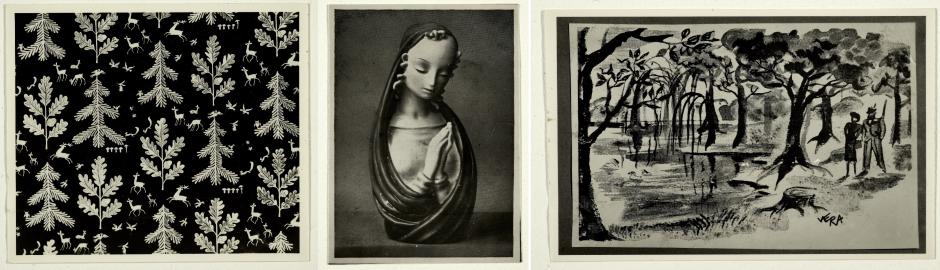
The letters are extremely poignant and highlight the increasingly desperate situation faced by Jews. Berta Wilczeck writes (in German) seeking assistance for herself and her 10 year old son, Heinrich:
I deeply worry about what to do if we don’t receive any help at all. Taking our own lives will be our only option … If only I had the chance to get away somewhere! Can only rich people receive help? They can all drive away but poor people cannot …
The Ministry of Commerce Files
All 50 of the Ministry of Commerce files (catalogue reference number COM/17/3/1-50) have been digitised and will be available to view on the PRONI eCatalogue later this year.
The original order of the files has been retained.
Letters within four of the files (catalogue reference numbers COM/17/3/1 and COM/17/3/3 to COM/17/3/6) are organised according to one of three indexes (A1, A2 and B) made by Ministry of Commerce officials (and retained within the following file – COM/17/3/2).
Letters relating to a fourth index ("Saturated Letters") are retained on file with that index (COM/17/3/6).
Some letters are organised in alphabetical order within files (see COM/17/3/7 to COM/17/3/29)
Some correspondence is contained within a file relating to a single individual (see COM/17/3/30 to COM/17/3/49).
The final file in the series (COM/17/3/50) appears to have little internal organisation and includes the chronologically latest letters.
Index to the Letters

A searchable index collates the information relating to the letters and to the indexes created by the Ministry of Commerce. This index was completed with assistance from Mischa Gerrard who completed a European Holocaust Research Infrastructure UK Student Placement with the Private Records Team.
I felt a strong responsibility to approach each application with care … as a researcher aware of the historical weight and human urgency these documents contain. Each file represented an individual or family negotiating survival within an increasingly oppressive system - Mischa Gerrard.
The index is accompanied by a key explaining the colour coding with the spreadsheet. The key also explains some of the terminology used within the index including:
Primary ‘applicants’ – This term refers to individuals who wrote a letter (or had somebody write a letter on their behalf) to the Ministry of Commerce. They did not complete an application form as required under the New Industries Act but, for ease of reference, they are referred to as primary 'applicants'.
Associated ‘applicants’ – This term refers to individuals mentioned in a letter written by a primary 'applicant'. These are usually family, friends or employees of the letter writer.
Missing Letters – This term refers to individuals whose names are only present on a Ministry of Commerce internal index and for whom there does not now appear to be an accompanying letter.
“Saturated” letters – This term used by the Ministry of Commerce, indicates that the industry which a letter relates to is over-subscribed or "saturated".