Interventive Conservation
The main source of damage to records is handling. This can exacerbate existing weaknesses in documents such as folds, brittleness or instability of the binding, causing tears or parts of the record to break away. Repairing this damage (interventive conservation) stabilises the record, reunites detached pieces and stops unique information from being lost.
Interventive conservation is time intensive, so where records are too fragile for general handling and access, conservation staff assess and evaluate the treatment required. Our programme of work is based on access priorities, public demand, historic significance, extent of treatment required etc. This includes preparation for digitization and consolidation for exhibition, all of which support public access to PRONI’s records.
Conservation treatment must be minimally invasive, reversible and sensitive to the materiality, construction and previous use of the original record. The intention is to protect what remains, rather than restore to an apparently new condition. Conservators at PRONI adhere to the professional standards from the national bodies of conservation. These are the Institute of Conservation, UK (ICON)’s Professional Standards and the Institute of Conservator-Restorer’s Code of Conduct.
If you are unable to order an item in the search room on preservation grounds, please speak to a member of staff.
Examples of conservation treatment
CAB/9/Z/1/1 – Boundary Commission files
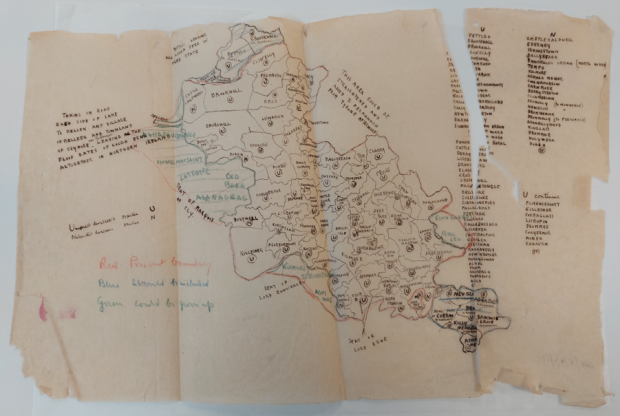
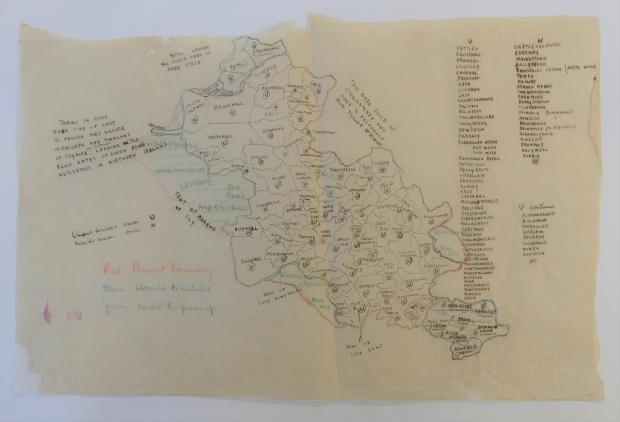
This is one of a collection of files conserved for digitization to mark the centenary of the Boundary Commission. 20th century files often have very thin paper and inks which are very sensitive to moisture but tear and crumple easily. This makes it easy for pieces to detach and words to be hidden in the digitized image.
Conservation made re-moistenable tissue in the studio by applying wheat starch paste and methylcellulose to 8gsm kozo paper and letting it dry. The adhesive is then reactivated with damp blotters and used to repair the documents. Here are examples of repaired pages before and after treatment.
CAB/9/Z/1/1 - Before
CAB/9/Z/1/1 - After
TBC
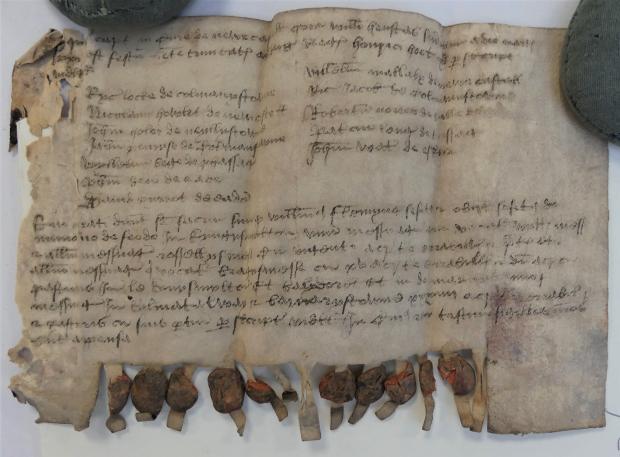
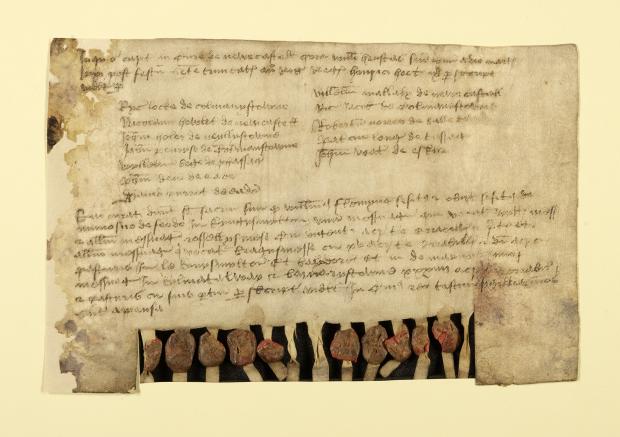
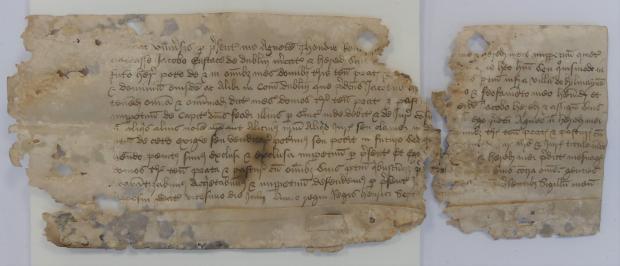
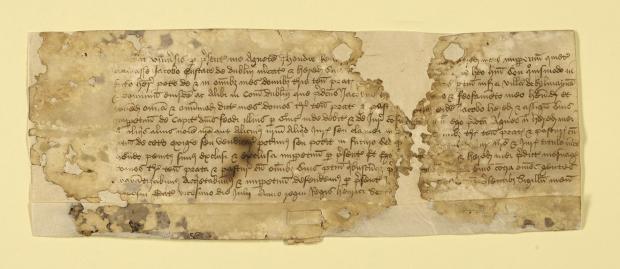
D430 - Bellew Collection
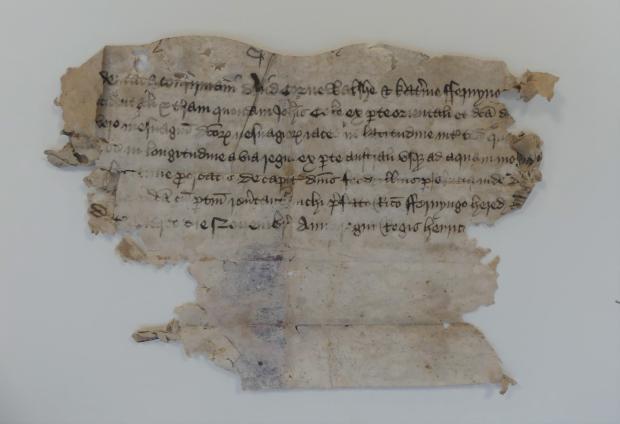
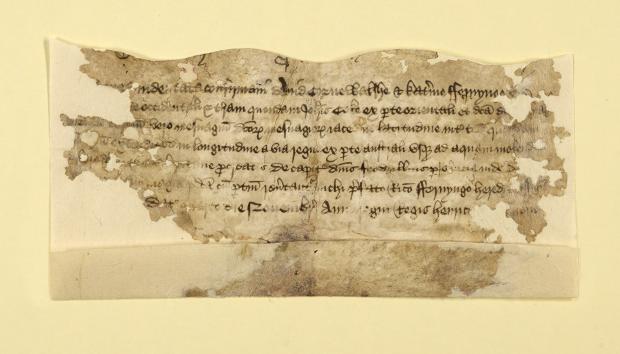
The Bellew Collection are one of PRONI’s oldest collections. They are legal documents dating from the 14th century relating to Dublin. Conservation have been working with these parchments along with the collection of title deeds and leases from the Leinster collection (also dating from the 14th century) to improve their storage. Some had suffered mould damage in their past and were repaired with wheat starch paste and Asian kozo papers to infill areas of lost paper.
D430/13 - Before
D430/13 - After
D430/32 - Before
D430/32 - After
D430/47 - Before
D430/47 - After
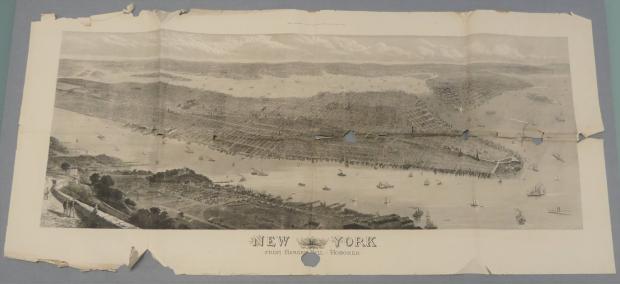
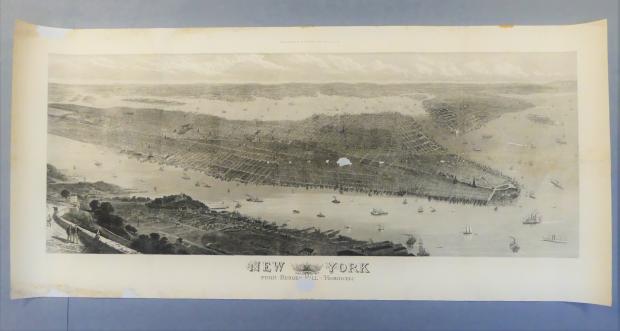
D791/81 - Map of New York from Bergen Hill, Hoboken, Illustrated London News
This map was requested for digitization as part of PRONI’s US250 events. It had torn and sustained losses at the edges and where it had been folded. It was cleaned, flattened and repaired locally with wheat starch paste and kozo papers.
D791/81 - Before
D791/81 - After
D4546/1-11 – Radcliffe Family Letters
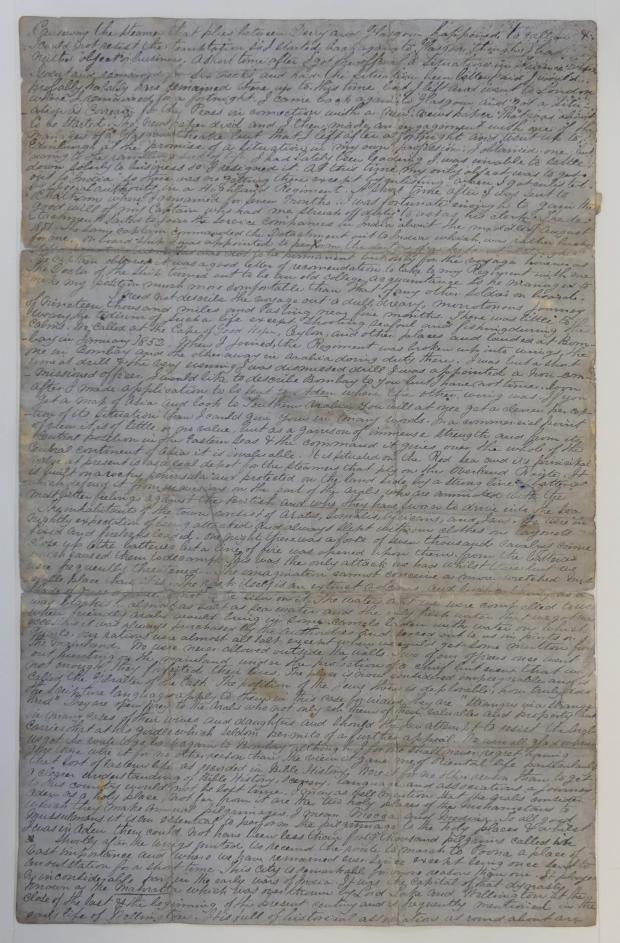
This collection of 11 letters from the Radcliffe family of Rathfriland where digitised for public access in the Reading Room. They had been folded repeated which caused sections to detach. They were dry cleaned and reattached with re-moistenable paper made in the PRONI studio.
D4546/1-11 - Before
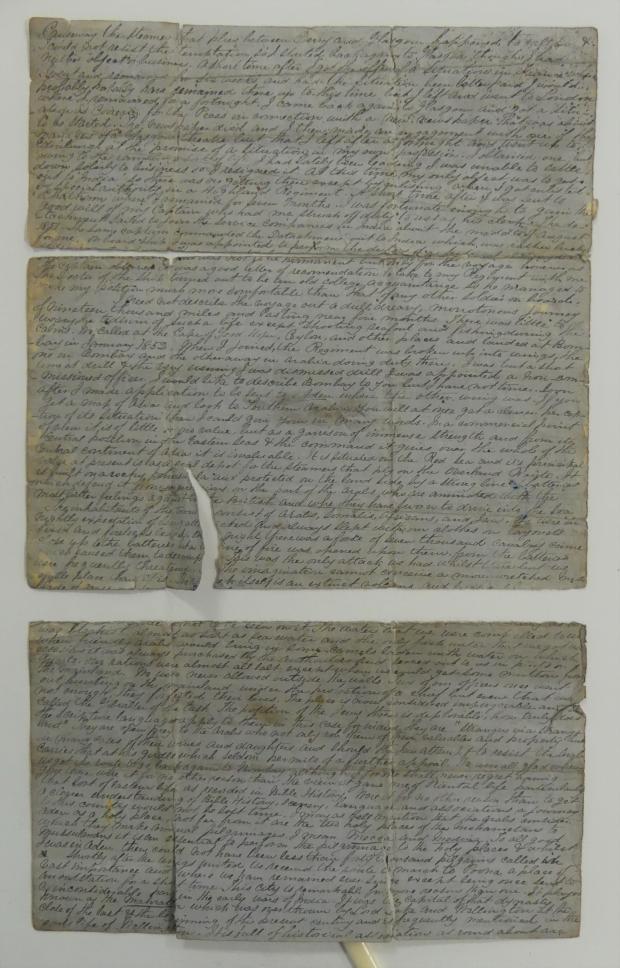
D4546/1-11 - After